The Airbnb Wine Store: How Much You Could Earn Selling Wine Per Year
Guests already want a bottle on night one. A curated in-unit wine store can add $1,500–$12,000 per year per property — without a liquor license or a full bar.
Every host has heard it: guests arrive after a long drive, open the fridge, and ask where they can buy wine. Some leave for a shop. Others never bother. A few message you at 9pm hoping you have a spare bottle.
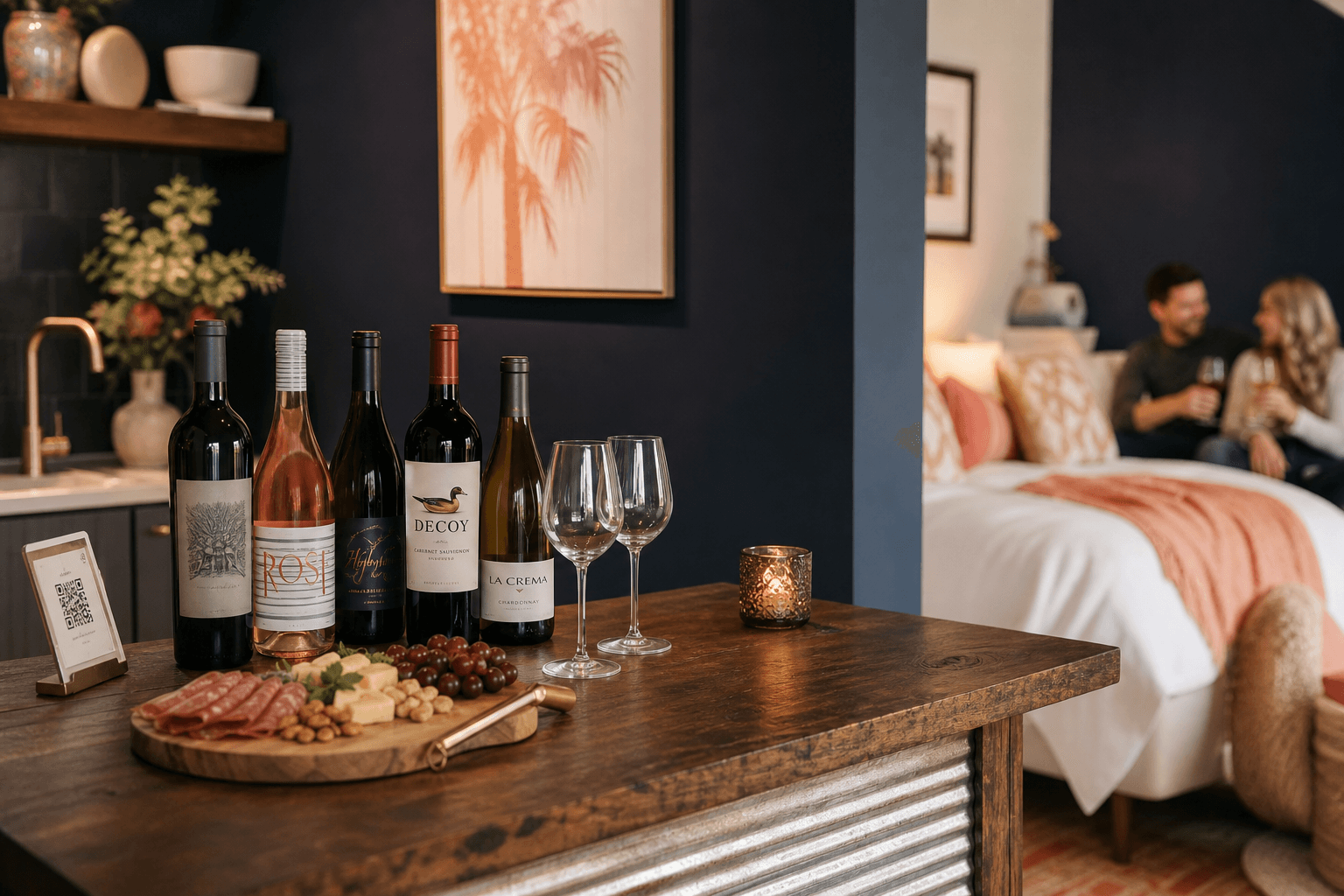
The opportunity is hiding in plain sight. You do not need a liquor store or a wet bar — just a small, curated shelf and a way for guests to pay without awkward conversations. A wine corner in your Airbnb, powered by a QR store like HostCart, turns a recurring guest need into one of your highest-margin revenue lines.
Why wine works better than almost anything else you can stock
Wine is an emotional purchase. Anniversaries, birthdays, girls' weekends, and 'we finally got away' trips all end with someone asking for a bottle. Guests are not price-comparing at 10pm — they are paying for convenience and the mood.
Margins are strong. A bottle you source for $8–$14 can sell for $18–$35 in-unit without feeling exploitative. Premium and local bottles — 'Selected by [Nearby Winery]' — routinely clear 60–75% margin because the story justifies the price.
Unlike snacks that guests might bring from home, wine is almost always bought on-site when it is available. That makes conversion rates consistently higher than generic pantry items.
The math: what hosts actually earn per year
Revenue depends on occupancy, placement, and how intentional your wine shelf is — not on being a sommelier. Here are three realistic scenarios based on HostCart host data and industry averages for short-term rentals.
Scenario 1 — Casual shelf (1-bedroom, ~15 stays/month)
You stock 6 bottles across two tiers: a $16 house red/white and a $28 local reserve. About 25% of stays buy at least one bottle — roughly 45 sales per year.
Average sale: $22. At a 55% blended margin, that is about $12 profit per bottle. Annual wine profit: ~$540–$800. Modest, but it covers your HostCart subscription many times over and costs almost nothing to maintain.
Scenario 2 — Active wine store (2-bedroom, ~20 stays/month)
You add a 'First Night' bundle (wine + snacks + water) for $38, display bottles near the kitchen island, and mention the QR in your check-in message. Conversion climbs to 35–40% — about 90 wine-related purchases per year.
Mix: 60% single bottles at $22, 25% premium at $35, 15% bundles at $55. Blended average order: ~$30. At 60% margin, profit per order is ~$18.
Annual wine profit: $1,600–$2,200. Gross revenue before costs: $2,700–$3,600. This is the sweet spot most urban and suburban hosts hit within 60 days of going live.
Scenario 3 — Wine destination property (romantic getaway, vineyard region)
Properties marketed to couples or located near wine country see 50–65% of stays include a wine purchase. At 22 stays/month average, that is 140+ transactions per year.
Higher basket sizes dominate: two-bottle packs at $55, celebration sets at $75, and premium local bottles at $40. Average order: $42–$48.
Annual wine profit: $5,000–$9,500. Top-performing hosts in this tier often pair with a local shop for exclusive labels guests cannot find at the supermarket — differentiation drives both conversion and margin.
Multi-property scale
Manage three similar 2-bedroom units with the same wine playbook? Scenario 2 at each property yields $4,800–$6,600 combined profit per year from wine alone — without adding a single booking night.
Five properties in a wine region at Scenario 3 levels can realistically produce $25,000–$40,000 in annual wine margin across the portfolio. The operational work is restocking and rotating SKUs, not negotiating with every guest.
How to set up your Airbnb wine store in one afternoon
Curate, don't clutter. Start with 6–8 bottles: two budget-friendly house wines, two mid-tier locals, one sparkling for celebrations, and a non-alcoholic option. Guests choose faster when the shelf looks intentional.
Price in tiers. A $14 house wine next to a $32 reserve makes both feel fair. Use HostCart's cost-plus margin tool so you always know profit before going live.
Place for the first night. Put bottles and your QR where guests land at check-in — kitchen counter, dining table, or welcome tray. Mention it once in your automated check-in message.
Bundle the moment. A 'First Night' set (wine + charcuterie snacks + water) converts tired arrivals who would not browse individual SKUs. It is often the highest-margin item in the store.
Let data restock for you. After two weeks, check which bottles move. Double local winners, drop what sits. Your shelf should evolve seasonally — rosé in summer, reds in winter.
Legal and practical notes
Rules vary by city and country. In most U.S. jurisdictions, hosts sell sealed bottles for on-premises consumption without a full liquor license — but always verify local regulations before stocking alcohol.
Stock only what you would personally serve. A small, honest selection beats a dusty rack of random labels. Include a note about responsible consumption in your house guide.
If alcohol is restricted in your area, the same playbook works for premium olive oil, local honey, craft beer where permitted, or zero-proof celebration kits. The revenue mechanics are identical.
The bottom line
A wine store in your Airbnb is not a gimmick — it is a hospitality feature that pays for itself. Most hosts under $2,000/year are leaving money on the table simply because guests do not know wine is available, or paying is too awkward.
A QR store removes both problems. Guests scan, choose, and pay in seconds. You keep 50–75% margins on every bottle. And unlike raising your nightly rate — which can hurt occupancy — in-stay wine revenue scales with how good the stay already is.
Start with eight bottles and one QR code this weekend. Your first Friday check-in will show you why hosts who add wine never take it off the shelf.
Ready to launch?
Turn your property into a guest-ready QR store
Create a branded store, publish your QR, and let guests pay securely for extras during their stay.
Get started free