
Why a Case of Cava (10–12 Bottles) Is One of the Smartest Airbnb Extras
A single case of cava costs less than one night’s cleaning fee — and can return $400–$3,500 per year. Here is the math for stocking 10 or 12 bottles in your rental.
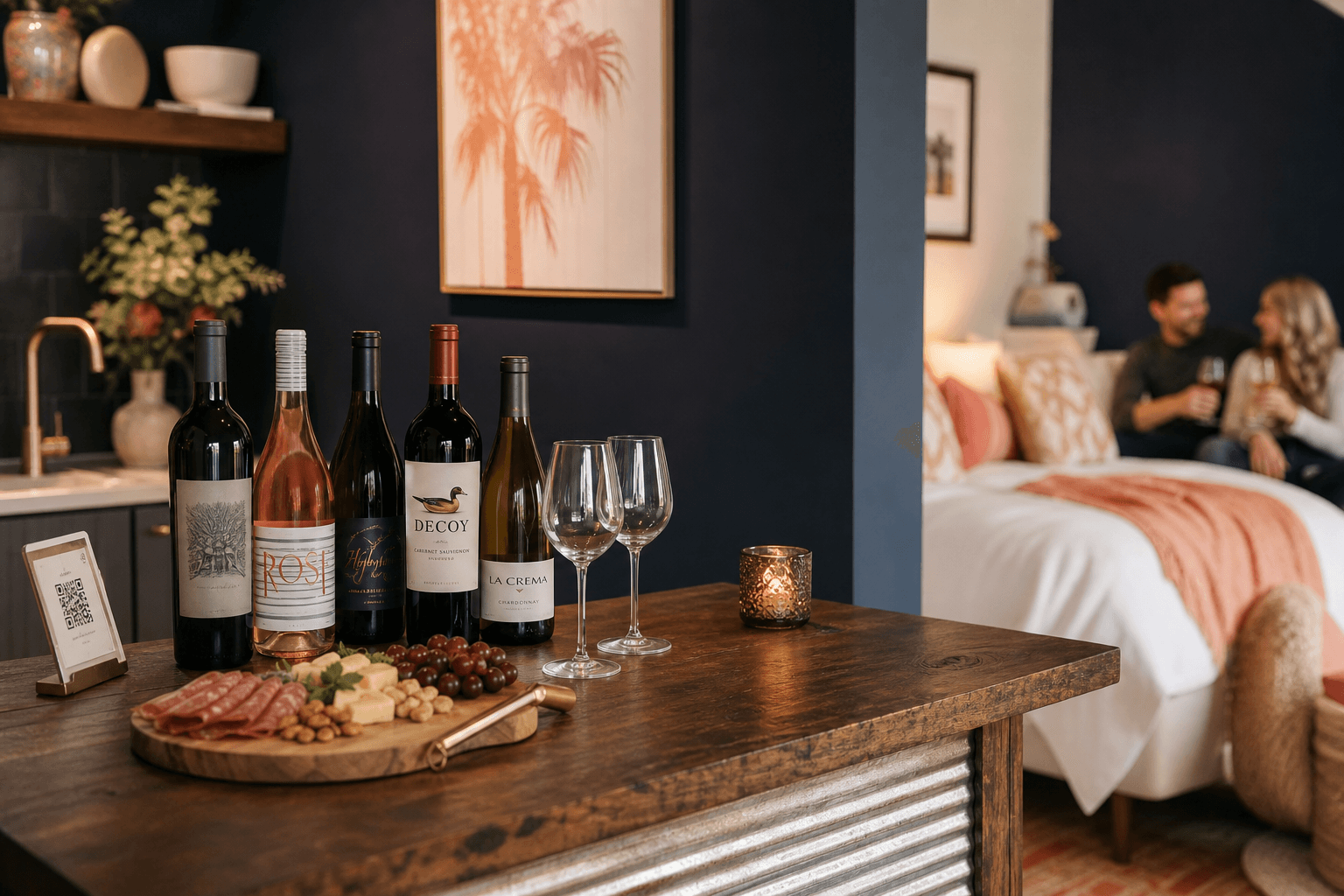
Guests do not arrive asking for a spreadsheet — they arrive asking for a toast. Birthdays, reunions, hen weekends, and ‘we finally got away’ trips all start with something bubbly in the fridge.
Cava is the sweet spot for hosts: festive like Champagne, affordable to buy in bulk, and easy to stock as a 10- or 12-bottle case without turning your rental into a wine shop. One case in the fridge plus a QR listing in HostCart can become one of your highest-margin lines — with almost no extra turnover work.
Why cava beats random wine bottles
Cava is built for groups. Unlike a single premium red, sparkling wine fits brunches, celebrations, and ‘first night’ moments — the exact windows when guests spend without comparing supermarket prices.
Buying by the case keeps your cost predictable. A decent host-grade cava runs $5–$7 per bottle wholesale (€4–€6 in Spain). A 12-bottle case lands around $60–$84 — less than many hosts spend on a single welcome basket.
Guests pay for convenience and mood, not wine scores. A bottle that costs you $6 can sell for $22–$28 in-unit at 10pm without feeling unfair — especially when the alternative is getting dressed and hunting a shop.
The unit economics (one case of 12)
Here is a realistic baseline using a 12-bottle case:
Your cost: 12 × $6 = $72 per case.
Your sale price: $24 per bottle via HostCart (cost-plus margin ~75%).
If you sell the full case: 12 × $24 = $288 revenue → $216 gross profit before restocking time.
You do not need to sell every bottle every month. Even at 50% sell-through, one case still returns ~$108 profit — often from a single weekend with two celebration stays.
Scenario 1 — Starter fridge (1-bedroom, ~12 stays/month)
You keep 12 chilled bottles (one case) and restock roughly four times per year. About 18% of stays buy one bottle — roughly 26 bottle sales annually.
Average profit: $16 per bottle after cost.
Annual cava profit: ~$400–$450.
Low effort, low risk — one case covers many months, and the QR handles payment without awkward ‘do you have prosecco?’ messages.
Scenario 2 — Active store (2-bedroom, ~20 stays/month)
You list cava in your First Night bundle, mention the QR in check-in, and restock one case every 6–8 weeks. Conversion reaches 30–35% of stays; some groups buy two bottles.
Roughly 90 bottle sales per year at $17 average profit.
Annual cava profit: ~$1,400–$1,600.
Gross revenue: ~$2,200–$2,500.
This is the level most urban and coastal hosts hit once the fridge placement and check-in message are dialed in.
Scenario 3 — Celebration & group property (villa, hen weekends, wine country)
Larger groups and romantic getaways push sparkling purchases higher: 40–50% of stays include cava, with averages of 1.5–2 bottles when guests brunch on-site or toast on arrival.
At 18–22 stays per month, that can mean 170+ bottle sales per year.
Average profit $18 per bottle → ~$2,800–$3,500 annual cava margin.
Bonus: offer a whole-case upsell for groups — e.g. 12 bottles for $220 (your cost ~$72, ~$148 profit per case). Four group bookings per year that take the case add ~$590 on top of single-bottle sales.
Multi-property scale
Run the Scenario 2 playbook on three similar units? That is ~$4,200–$4,800 combined cava profit per year — from stock that fits in a shopping cart, not a warehouse.
Five celebration-oriented properties at Scenario 3 levels can realistically produce $14,000–$17,000 in annual cava margin across the portfolio, with restocking on a simple rotation calendar.
How to set it up this weekend
Buy one case, not a wine list. Start with 10 or 12 bottles of one reliable cava guests recognize — plus one zero-alcohol sparkling option for drivers.
Chill where guests look first. The fridge door or top shelf beats a hidden cabinet. Visibility drives impulse buys on night one.
Price in two tiers. A $20 ‘House Cava’ next to a $32 ‘Premium Reserva’ makes both feel fair. Use HostCart’s margin tool so you always know profit before going live.
Bundle the arrival moment. ‘First Night Fizz’ (cava + water + snacks) converts tired groups who will not browse individual SKUs.
List the whole case for groups. In HostCart, add a 12-bottle case SKU for reunions and celebrations — one scan, one payment, no negotiating.
Legal and practical notes
Rules vary by city and country. In most Spanish regions and many U.S. jurisdictions, hosts sell sealed bottles for on-premises consumption — but always verify local alcohol rules before stocking.
Rotate stock FIFO (first in, first out). Cava is not age-worthy like red wine; fresh bottles taste better and reduce waste.
If alcohol is restricted in your market, the same playbook works for premium sparkling water, mocktails, or local kombucha — the revenue mechanics are identical.
The bottom line
A 10- or 12-bottle cava case is one of the smallest investments with the clearest upside in short-term rentals. The product sells itself on celebration nights; HostCart removes the awkward payment conversation.
Start with one case, one QR code, and one check-in line this week. Track sales for 14 days — most hosts know within the first month whether to double the fridge shelf or add a premium label.
Your guests already want a toast. You might as well earn $400–$3,500 a year providing it.
Ready to launch?
Turn your property into a guest-ready QR store
Create a branded store, publish your QR, and let guests pay securely for the extras they want during their stay.
Get started free